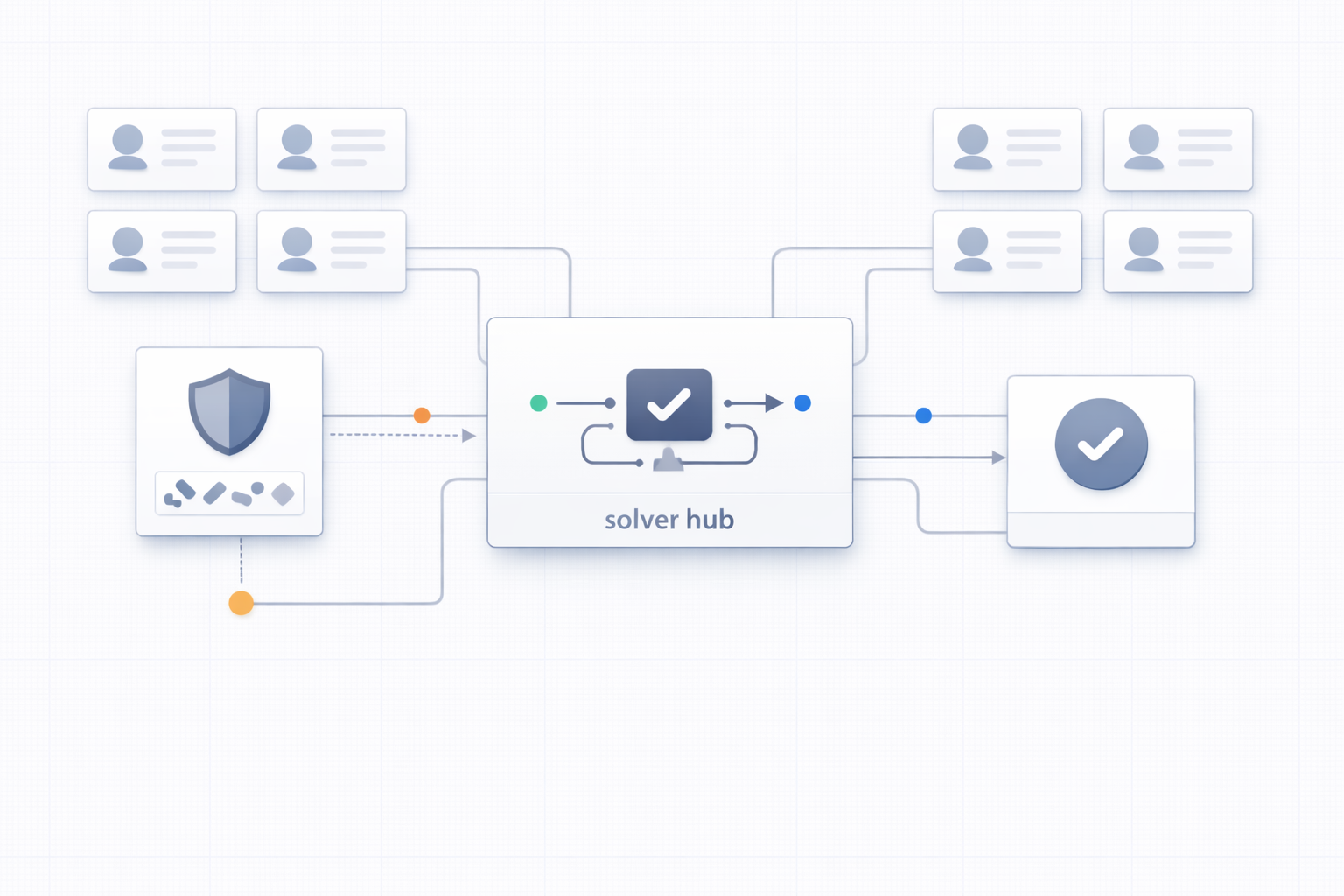
Automating actions online and multi-accounting (working with many accounts at the same time) almost inevitably leads to CAPTCHAs. If you have ever scraped websites, run large-scale app testing, or managed multiple accounts, you have definitely run into these annoying challenges. CAPTCHAs slow everything down and make it harder to scale, because they require manual confirmation that you are not a bot. For developers working on multi-account workflows, this is a serious obstacle: when you manage dozens or hundreds of accounts, solving CAPTCHAs by hand quickly becomes unrealistic.
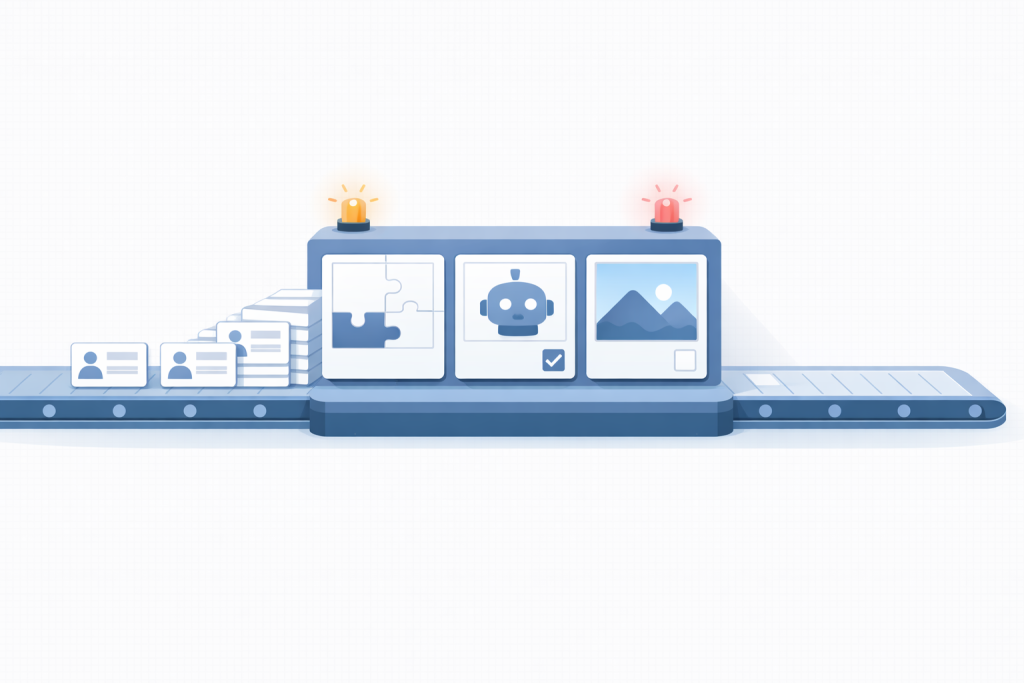
Fortunately, there are dedicated CAPTCHA-solving services that handle these tasks for you. These services let you bypass checks programmatically: your bot or script sends a CAPTCHA image or token to a service via an API, and then either an OCR-based algorithm, a human operator (or, often, a hybrid of both) returns the correct answer. The solution is delivered back to your application, and the automation continues without interruptions. In this article, we will provide a detailed comparison of popular CAPTCHA-solving services-such as 2Captcha, SolveCaptcha, Anti-Captcha, and DeathByCaptcha-through the lens of multi-accounting use cases. We will look at how they work, what CAPTCHA types they support, their speed, pricing, and integration specifics for your tooling.
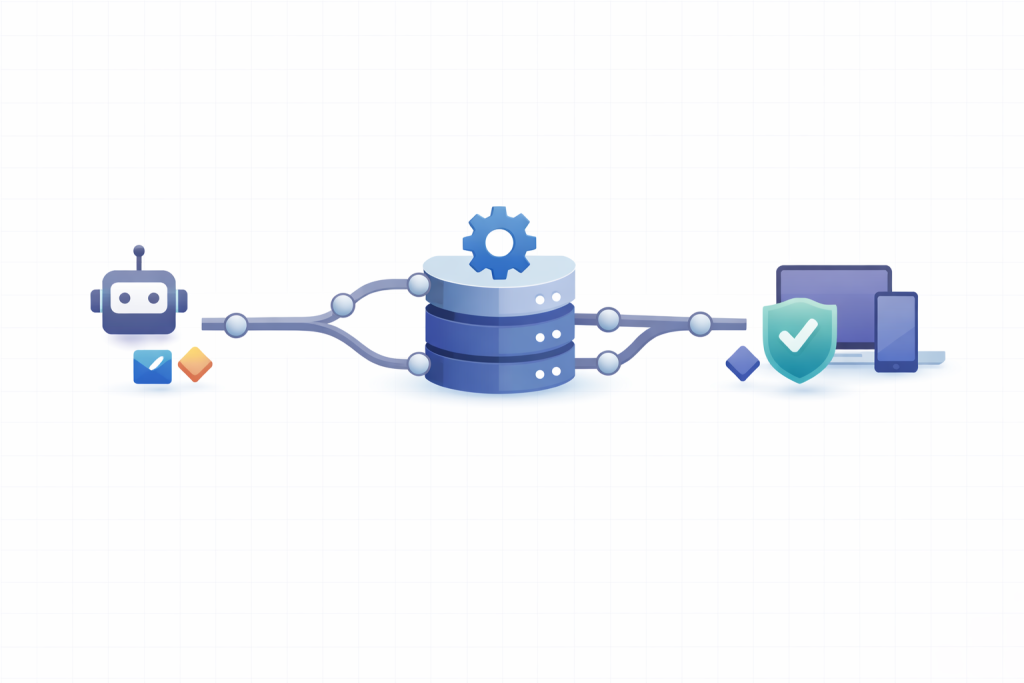
CAPTCHA-solving approaches: humans vs. algorithms
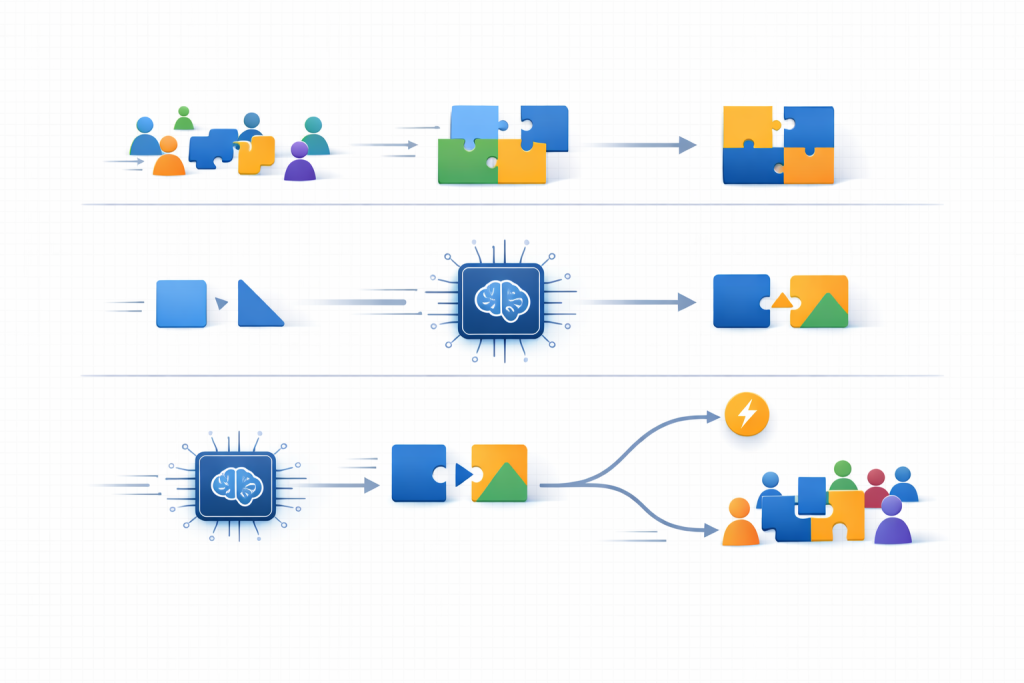
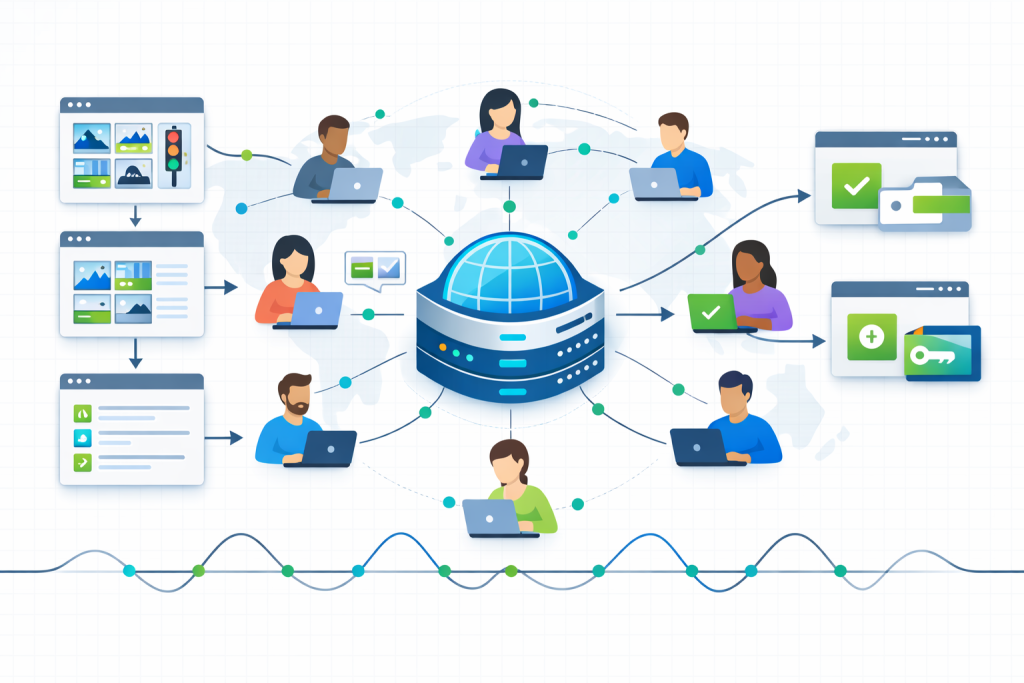
Anti-CAPTCHA services can be broadly grouped by recognition method: human-assisted and fully automated. The classic approach the industry started with is crowdsourcing: the service connects customers to a large pool of real operators worldwide who enter solutions manually. A well-known example is 2Captcha, where a distributed workforce is ready at any moment to decode a prompted image. This model provides high accuracy (close to 99% on simple tasks) because a human solves the CAPTCHA. However, solve time depends on typing speed and task complexity: typically 5 to 20 seconds, and for reCAPTCHA it may take around 40 seconds to receive the final token.
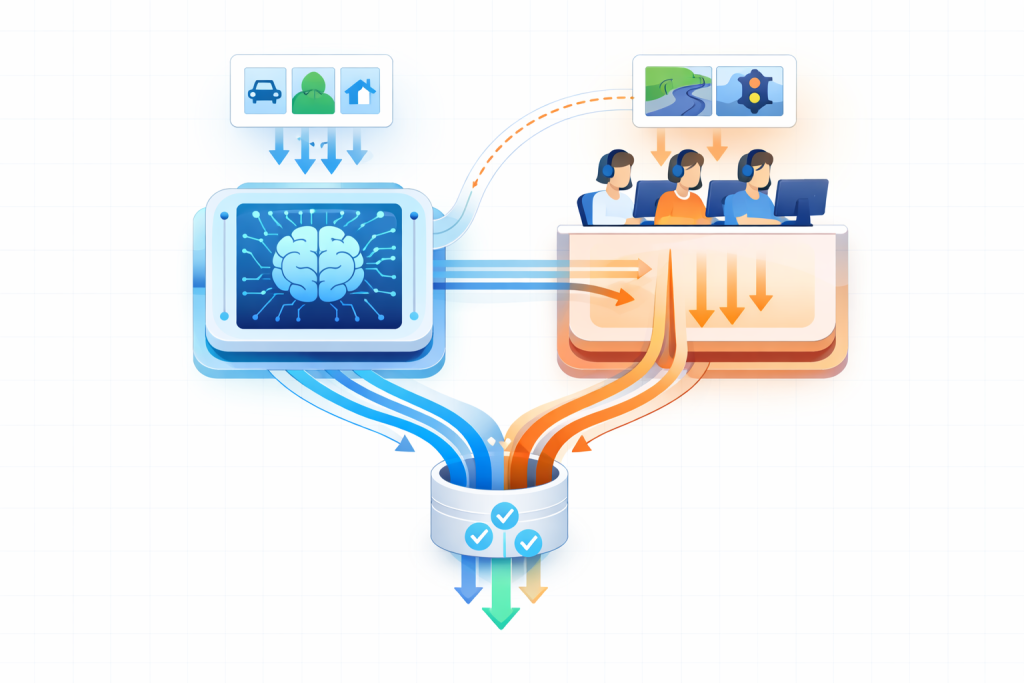
The other approach is fully automated solving using computer vision and neural networks. Modern AI solutions can solve certain CAPTCHA types instantly-especially text-based and simple visual challenges-in fractions of a second. But complex systems (for example, Google reCAPTCHA or Arkose Labs puzzles) are still difficult to solve reliably without human involvement, and neural models can fail. That is why many services use a hybrid model in practice: they combine AI and human labor. For example, SolveCaptcha first attempts an algorithmic solve for simple CAPTCHAs, and if it fails-or if the CAPTCHA is complex (say, image-based reCAPTCHA)-the job is automatically routed to a human operator. This hybrid approach increases overall efficiency: it saves time on trivial tasks and reduces cost by offloading operators, while preserving the ability to solve any CAPTCHA a human can handle.
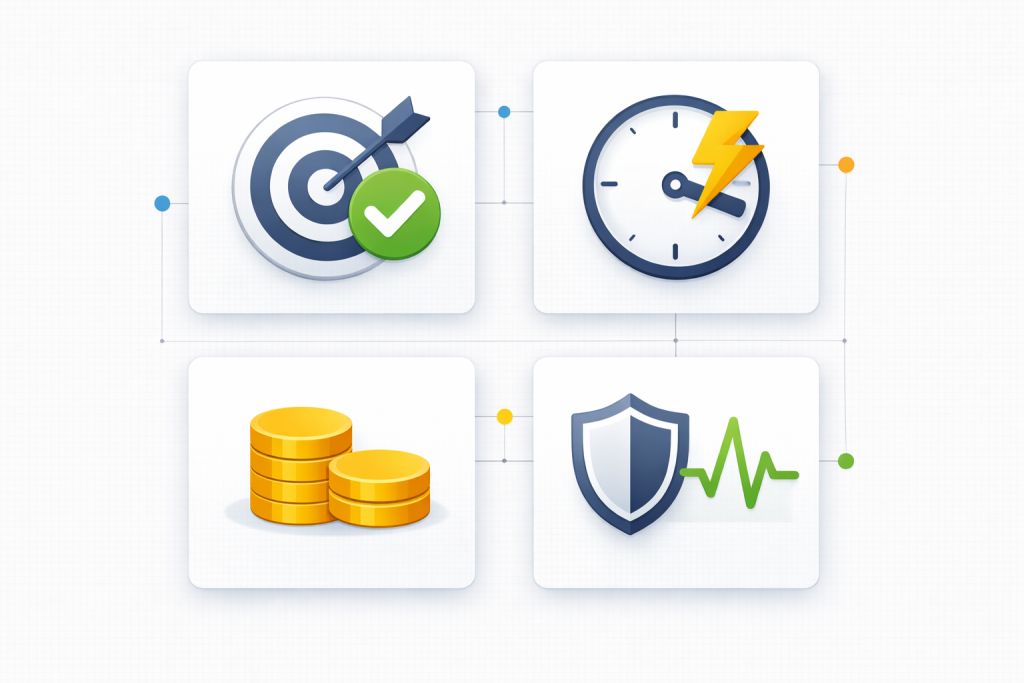
When choosing an anti-CAPTCHA service, it is important to consider four key parameters: recognition accuracy, solve speed, per-CAPTCHA cost, and overall system stability. In multi-accounting scenarios, speed (to avoid bottlenecking bots running many accounts in parallel) and bulk throughput (many services support hundreds of concurrent requests) typically matter most. Now, to the services.
2Captcha
2Captcha is one of the oldest and most widely known CAPTCHA-solving services, operating since 2014. It follows a classic crowdsourcing model: a large pool of human workers worldwide solves submitted tasks manually. Thanks to this workforce, the service supports virtually any CAPTCHA type that a person can solve-from basic text recognition and arithmetic challenges to Google reCAPTCHA (v2, v3, Invisible), complex Arkose Labs puzzles (FunCaptcha), GeeTest tasks, and more.
One of 2Captcha’s main strengths is stability and broad integration coverage. Thanks to its long track record, it is supported out of the box in many ready-made solutions. 2Captcha is integrated with 4,500+ different programs and automation tools-from SEO software and scripting libraries to anti-detect browsers. The service provides a straightforward API and extensive documentation with examples in popular languages (Python, PHP, JavaScript, C#, Java, Go, etc.). For Chrome, Firefox, and Edge there are official extensions that let you solve CAPTCHAs through the service in a browser workflow, which can be useful for specific cases or debugging.
Pricing and speed: 2Captcha uses dynamic rates depending on platform load and CAPTCHA type. Standard text CAPTCHAs cost roughly from about $0.23 per 1,000 solves, with an average response time of ~4 seconds. More complex challenges cost more-for example, reCAPTCHA v2 is about $0.90 per 1,000 (typically solved in 10–20 seconds), FunCaptcha is around $1.28 per 1,000 (15–30 seconds), and GeeTest can be up to about $2.06 per 1,000. Payment is charged only for successfully solved CAPTCHAs. For high volumes, cumulative discounts may apply. 2Captcha also offers an affiliate program and even an earning option-anyone can become a worker and get paid for manually solving CAPTCHAs in the system.
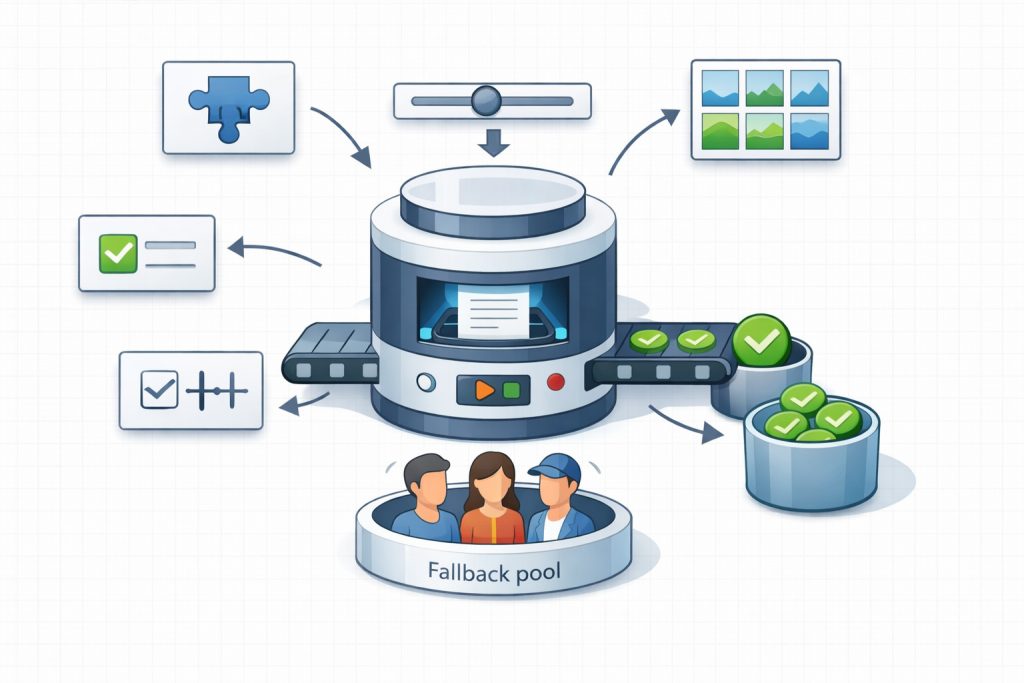
Advantages of 2Captcha: Time-tested reliability and near-universal coverage of CAPTCHA types. The service acts as a “workhorse” that can handle difficult and unusual cases. Its infrastructure is built for 24/7 operation; support typically responds quickly when issues occur. For developers, integration is straightforward-there are ready-made modules and code examples, and many third-party applications already support 2Captcha. High accuracy is driven by human intelligence. In addition, 2Captcha can serve as a fallback option when fully automated methods fail-there will be an operator who can provide the correct answer.
Disadvantages of 2Captcha: The human factor is both a plus and a minus. On some CAPTCHA types, fully automated services can be faster-while an operator reads and types, a neural model may already return an answer. For example, reCAPTCHA v2 averages around ~15 seconds here, while some AI-first services may report 5–7 seconds for token generation. Paying for human labor can also make the cost slightly higher than machine-only solutions (especially at scale). That said, the price difference is often justified by stability and accuracy.
SolveCaptcha

SolveCaptcha is a relatively new player that has gained traction quickly thanks to its emphasis on speed and efficiency. Philosophically, it is “hybrid intelligence” in a pure form: the service actively uses neural networks for simple CAPTCHAs and automatically brings in human operators where AI struggles (complex images, riddles, multi-step challenges). This allows SolveCaptcha to claim strong speed metrics while maintaining a high success rate. In simple terms: the machine handles routine tasks, the human handles what the machine cannot, and the customer gets results as fast and cost-effectively as possible.
The service supports the full range of common CAPTCHAs-Google reCAPTCHA (including Invisible and v3), Cloudflare challenges (Turnstile and older flows), Arkose Labs FunCaptcha, GeeTest (v3/v4), classic image CAPTCHAs, text riddles, sliders, and more. In terms of type coverage, it does not lag behind 2Captcha. New mechanisms that appear on websites are added quickly-Cloudflare Turnstile, for instance, is supported as well. SolveCaptcha is positioned as one of the fastest. For a simple image CAPTCHA, the average solve time is ~3 seconds; for puzzle-style CAPTCHAs like GeeTest, ~10 seconds; for Cloudflare Turnstile, around 13 seconds; and for Arkose FunCaptcha, about 25 seconds on average. These are strong results, comparable to-or better than-many competitors.
SolveCaptcha’s pricing is transparent: the website provides a rate table for each CAPTCHA type and solve method. For example, the price per 1,000 solved Google reCAPTCHA v2 is around $0.55, and reCAPTCHA v3 is about $0.80. Solving Cloudflare Turnstile costs roughly $0.80 per 1,000. Notably, Arkose Labs FunCaptcha is listed as a range of $2.99–$50 per 1,000-apparently depending on the complexity of a given challenge (some Arkose “game-like” puzzles can be extremely labor-intensive, and some may require manual solving). Standard image CAPTCHAs are around $0.35 per 1,000 (pricing may vary slightly based on current load). Overall, rates are highly competitive; combined with time savings from AI, this is a key reason the service is attractive for large-scale projects. SolveCaptcha does not charge subscriptions-payment is only for successfully solved CAPTCHAs, and the service promises refunds for incorrect solves (as other major providers do).
On the integration side, SolveCaptcha also performs well. It provides SDKs for popular languages and frameworks-Python, Java, C#, Go, PHP, Ruby, JavaScript, and more. The API is designed to be simple and clear; there is detailed documentation and a developer FAQ. The dashboard is modern and minimalistic, shows real-time solving statistics, supports webhooks for automatic result delivery, allows setting maximum price caps per CAPTCHA, and more. Support is responsive, which matters when you hit edge cases. SolveCaptcha can be used not only via code-there is also a browser extension that solves CAPTCHAs automatically in the background for users who prefer that workflow.
Advantages of SolveCaptcha: The main strengths are speed and cost efficiency, which are especially valuable in multi-accounting. In high-load scenarios where you solve thousands of CAPTCHAs, even a few seconds saved per challenge adds up to minutes and hours. SolveCaptcha is designed for such workloads: the hybrid model improves throughput, and transparent pricing makes budgeting predictable. The service also offers a modern developer experience-clear API, fresh UI, and practical code examples-which reduces adoption friction. It is also positioned as highly resilient, with 99.99% infrastructure uptime and stable API availability, which is critical when bots must run around the clock. Finally, it excels on simple tasks: thanks to AI, basic CAPTCHAs are solved instantly without human involvement, saving both time and money (since pricing for these is minimal).
Disadvantages of SolveCaptcha: The service is relatively new, so it may be less “default-integrated” into some older tools. While major platforms (including popular scraping frameworks and anti-detect browsers) already support SolveCaptcha, in some cases you need to wire it up manually via API. With ready-made SDKs, this is rarely a real problem. In certain niche cases, a fully human approach like 2Captcha may produce a higher success rate (for very unusual or rare CAPTCHA types). The choice depends on project priorities: 2Captcha is maximum compatibility and long-proven stability, while SolveCaptcha is optimized for speed and cost control.
Anti-Captcha (Antigate)

Anti-Captcha (also known as Antigate under its legacy domain) is another major service that has been in the industry since the early days of large-scale CAPTCHA solving. It also relies heavily on manual solving: thousands of operators worldwide decode submitted images. Anti-Captcha supports virtually all CAPTCHA types-from classic text and image CAPTCHAs to reCAPTCHA v2/v3/Enterprise, Arkose Labs FunCaptcha, Cloudflare Turnstile, GeeTest, and others. In practice, the supported-type list is similar to 2Captcha’s. Anti-Captcha has also introduced an AI-driven mode-a fast recognition option that can work in under 2 seconds, though with somewhat lower accuracy. In other words, the service is also moving toward hybrid technology, offering a choice: instant neural solving (with some risk of errors) or slightly slower but reliably accurate human solving.
A notable aspect of Anti-Captcha is its broad targeting-from small-scale scripts to enterprise customers. The service supports many payment methods (bank cards, crypto, and more) and flexible billing. For example, you can pay as you go via balance top-ups or buy CAPTCHA-credit bundles in bulk with discounts. The base price is listed from $0.50 per 1,000 simple CAPTCHAs. Solving reCAPTCHA is more expensive-roughly $0.90–$2.00 and up to $5.00 per 1,000 for the hardest variants (for example, reCAPTCHA Enterprise).
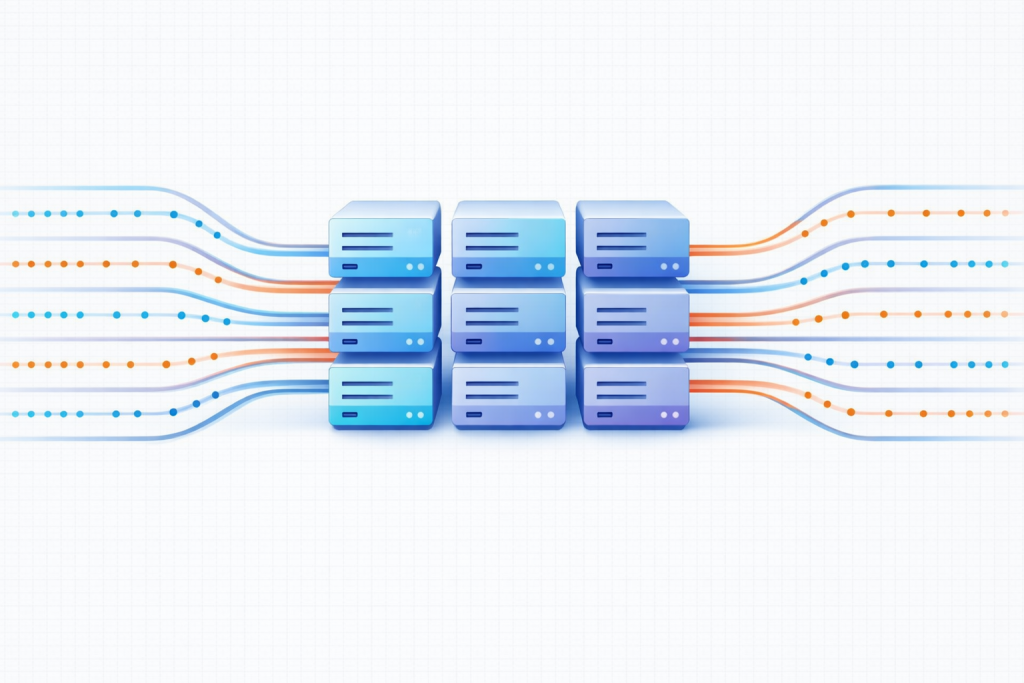
In terms of speed, Anti-Captcha is comparable to 2Captcha: standard CAPTCHAs are solved in a few seconds, while complex ones may take tens of seconds. A major advantage is effectively unlimited parallelism: you can submit hundreds or even thousands of requests at once, and the service will process them in parallel rather than queueing them linearly. This is critical for multi-accounting: if 100 accounts hit a “I’m not a robot” check at the same time, Anti-Captcha can handle them concurrently. Smaller services may struggle under peak load.
For integration, Anti-Captcha provides a standard HTTP API that is largely compatible in shape with common industry formats. This means many programs that support 2Captcha-like flows can also work with Anti-Captcha by switching the API key and endpoint. In addition, the service offers its own libraries, plugins, and examples. There is also a browser plugin for Chrome/Firefox to automate CAPTCHAs directly in the browser, and even a mobile SDK for integrating CAPTCHA solving into mobile apps.
Advantages of Anti-Captcha: Strong reliability and quality: a large worldwide operator pool solves CAPTCHAs around the clock, delivering fast reaction times and a near-max success rate. Anti-Captcha scales well-from one-off scripts to production volumes. Another plus is a wide range of payment methods and no strict throughput caps. For multi-accounting, that means you are less likely to hit scaling ceilings as your infrastructure grows.
Disadvantages of Anti-Captcha: The main drawback is higher-than-average pricing. You pay for a more “premium” service experience: at high volumes, a $0.50–$1.00 difference per 1,000 CAPTCHAs compared to 2Captcha or SolveCaptcha can add up. If the budget is tight, that can matter over long-running workloads. Also, there are no free trial options-testing requires an initial deposit (though the entry threshold is low). Otherwise, no major technical downsides are commonly highlighted. The AI mode is relatively new and may be less accurate than fully manual solving-but it is optional, and you can prioritize human solving when needed.
DeathByCaptcha

DeathByCaptcha (DBC) is a market veteran launched around 2009. With more than 15 years of operation, the service has accumulated substantial experience and a large customer base. From the beginning, DBC emphasized a hybrid model: it was among the early services to combine automated recognition (OCR) with manual operator input. This means DBC still relies on human labor, but it is augmented by internal algorithms that speed up simple challenges. In terms of supported CAPTCHA types, DeathByCaptcha is arguably a leader: the developers claim support for thousands of CAPTCHA variants. The list includes almost everything-standard text image CAPTCHAs, reCAPTCHA v2/v3/Invisible, GeeTest v3/v4, Cloudflare Turnstile, game-like puzzles (for example, Capy Puzzle-style flows), older systems like KeyCaptcha, audio CAPTCHAs, and more niche types such as Lemin, MTCaptcha, and others. If a new challenge appears somewhere, there is a good chance DBC already supports it or will add it quickly.
In solve quality, DeathByCaptcha performs solidly. Claimed accuracy is ~90% on average and up to 100% on simple CAPTCHAs (incorrect solutions are not charged). For standard image CAPTCHAs, DBC even advertises a 100% success guarantee or no charge-clearly, their algorithms handle these fully automatically in many cases. The service has been running 24/7 for years, which suggests good stability. For returning customers, there is a loyalty system (DBC Points), bonuses for crypto payments (up to a 10% bonus), and volume discounts for larger deposits. DBC also offers additional services such as data entry outsourcing and custom development, which goes beyond CAPTCHA solving and is mostly relevant to enterprise users.
Now to pricing and performance. DeathByCaptcha charges from $0.99 per 1,000 standard CAPTCHAs on the basic tier, up to $1.39–$2.00 per 1,000 in higher-priority modes. Solve speed is high: a simple CAPTCHA is often solved in ~2 seconds. These numbers are achieved thanks to OCR-many typical images are recognized automatically almost instantly. For reCAPTCHA and similar complex tests, the situation is different: DBC offers a special premium AI-oriented mode (marketed as “Superior AntiCaptcha”), where reCAPTCHA v2/v3 and similar challenges cost about $2.89 per 1,000, with an average response time of ~26 seconds. This is comparable to 2Captcha/Anti-Captcha speed, but somewhat higher in price. In practice, the customer can choose a mode: standard (cheaper, but not necessarily faster on complex CAPTCHAs) or premium (optimized for speed and success).
For integration, DBC offers an API similar to common industry standards (HTTP formats compatible with Antigate/2Captcha-style flows), plus some unique capabilities. There are official libraries for major languages, as well as Chrome and Firefox extensions-so DeathByCaptcha can be used not only in server scripts, but also directly in a user’s browser workflow for automating routine tasks. As with competitors, there is a referral program that grants bonuses for bringing in new customers. DBC is also integrated with a wide range of automation tools and has historically been used in areas that require high-volume workflows.
Advantages of DeathByCaptcha: Extensive experience and broad coverage. DBC was an early adopter of hybrid recognition, so it has accumulated many optimizations across CAPTCHA types. Rare or exotic challenge formats that other services may fail on are more likely to be handled here-sometimes even automatically. The payment model is also transparent: you do not pay for incorrect answers, and support can compensate for failed solves. DBC is developer-friendly: a clear API, examples, and compatibility with popular API formats make migration straightforward. Returning users benefit from discounts and bonuses that reduce effective cost. Fast solving of simple CAPTCHAs (often within seconds) is another meaningful advantage that speeds up scraping and similar operations.
Disadvantages of DeathByCaptcha: As CAPTCHAs become more complex, DBC is no longer a clear leader in either speed or price. The $2.89 per 1,000 rate for reCAPTCHAs and similar tasks is somewhat higher than some alternatives, and ~26 seconds, while acceptable, can be slower than certain AI-first approaches. For ultra-high-speed projects, DBC may not be the most cost-effective option. Also, as an older service, it may be less visible in the modern market compared to more frequently discussed competitors. Still, DBC remains a reliable choice, especially if you need broad compatibility and unusually wide coverage of CAPTCHA types.
Other solutions
Beyond the services above, there are many other tools for automated CAPTCHA bypass-both online services and self-hosted software. Briefly, here are a few:
AZCaptcha – a budget overseas service focused on fully automated recognition. It offers low pricing (around $1.10 per 1,000 for reCAPTCHA v2/v3 and about $0.40 per 1,000 for standard image CAPTCHAs). It also advertises unlimited plans: for example, for $24.90 per month you can solve CAPTCHAs without a hard quantity limit (with constraints on concurrent processing). Claimed accuracy is ~95%, with fast solve times (1–4 seconds for standard CAPTCHAs, up to ~70 seconds for reCAPTCHA). Such a service can be cost-effective at very large volumes, where a flat monthly fee reduces spend. However, fully automated solving can fail on newly changed CAPTCHA variants, and ~70 seconds for reCAPTCHA is noticeably above typical market averages (without humans, it is hard to achieve consistently fast results on the hardest tasks).
CapMonster – a family of products from Zennolab. It comes in two formats: the local CapMonster Pro application and the cloud service CapMonster.Cloud. This is a popular choice among advanced users who want independence from third-party solvers. The local CapMonster is software installed on your machine/server that solves CAPTCHAs on your own side using built-in modules and neural networks. It can emulate 2Captcha/Anti-Captcha-style APIs, making it easy to plug into existing systems. The advantage is a one-time license purchase (no recurring payments) and no network latency. At the same time, recognition quality depends on your hardware and on keeping libraries up to date: CapMonster is strong on simple CAPTCHAs and can be trained on new ones, but it may struggle with constantly evolving Google mechanisms without regular updates. The cloud version aims to combine automation and scalability; some users note occasional access issues, but the product is still worth considering if you want maximum control over CAPTCHA-solving or need tight integration into complex automation stacks (for example, ZennoPoster-based pipelines).
NopeCHA – an interesting service offering an AI-powered browser extension. In practice, it is a plugin that can solve some CAPTCHAs locally using built-in models. However, it does not handle everything reliably and after the free limit is reached it requires a paid subscription. It is sometimes mentioned as an option for users with extremely tight budgets, but it is generally less suitable for professional multi-accounting due to inconsistent results.
Bright Data CAPTCHA Solver – an AI-based solution from the well-known proxy provider Bright Data. It is part of their Web Unlocker platform, offering enterprise customers a “proxies + CAPTCHA bypass” bundle. The tool imitates human behavior (including browser fingerprinting strategies) and automatically solves common CAPTCHA types (reCAPTCHA, pxCaptcha, GeeTest, Turnstile, and others). Bright Data pricing is high: from about $1.50 per 1,000 solves in pay-as-you-go mode, and closer to $1.00 per 1,000 in larger packages. This service is primarily aimed at large organizations that need scalability and tight integration with the rest of Bright Data’s platform, and it is often not economically justified for individual multi-account projects.
It is impossible to list every solution-the market continues to grow. Still, the main trends are clear: everyone is pushing for higher speed via AI, maintaining or improving accuracy, lowering cost, and making integration more convenient.
CAPTCHA-solving services in the context of multi-accounting
For those who do multi-accounting professionally-running hundreds of social media accounts, registering at scale for workflows that require many profiles, or scraping data at industrial volumes-the right CAPTCHA-solving service matters. CAPTCHAs are often the last line of defense against automation, and the ability to bypass them reliably and quietly has a direct impact on productivity. Let’s look at what multi-account practitioners should pay attention to when working with anti-CAPTCHA services.
First, make sure the service supports parallel solving at scale. All major players (2Captcha, Anti-Captcha, SolveCaptcha, DeathByCaptcha) can handle this-you can submit as many requests as needed and receive results as they become available. For example, Anti-Captcha explicitly emphasizes parallel solving at high concurrency, while 2Captcha is known for scaling via a large worker pool. This means that if 50 accounts hit a “I’m not a robot” check at the same time, you do not have to wait in sequence-the service will solve them concurrently. For multi-accounting, this saves a significant amount of time.
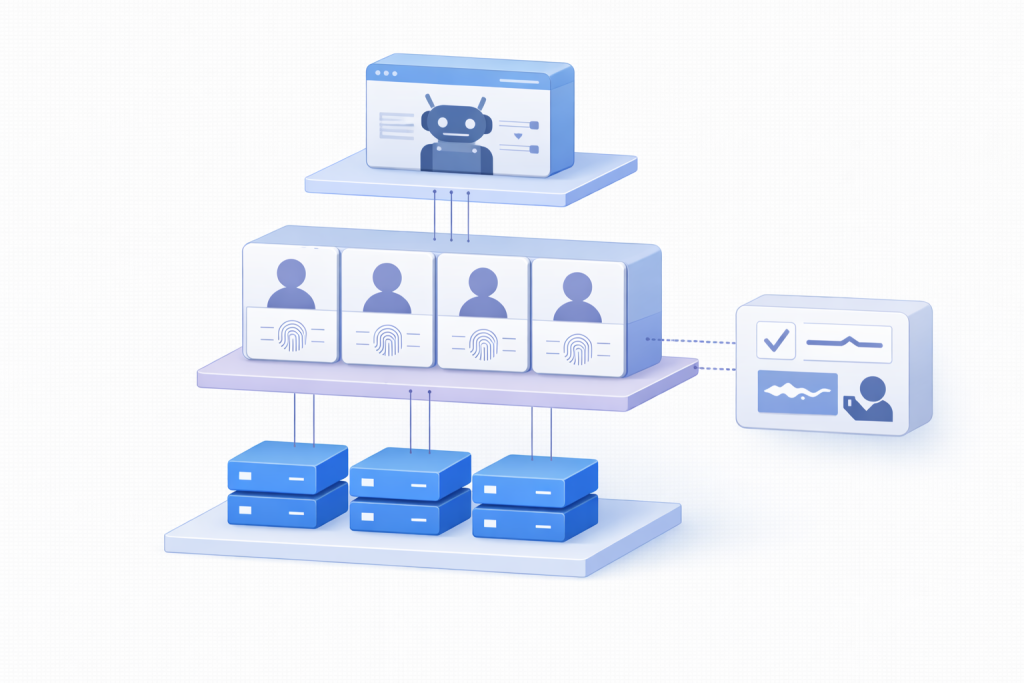
Second, ensure smooth integration of CAPTCHA solving into your multi-account infrastructure. Typically, this means anti-detect browsers (VMLogin) or custom scripts paired with proxies. Most anti-CAPTCHA services offer plugins or native support for common platforms. Many anti-detect solutions let you enter a CAPTCHA-service API key directly in the profile settings, after which the entire solving process becomes invisible to the operator: when a CAPTCHA appears, the browser automatically sends it for solving and inserts the returned answer. This level of automation is essential for scaling account operations without constant manual intervention.
Solve speed also needs to be evaluated in the context of your workflow. If your actions are sequential (for example, logging into 10 accounts one by one), a difference between 10 and 30 seconds may not be critical. But if you run a script that must register hundreds of accounts quickly, every second matters. In those cases, it may be better to choose a service optimized for throughput (SolveCaptcha or cloud automation modes) or to use premium/priority solving modes. In the opposite scenario-when CAPTCHAs are less frequent but success rate is paramount-it is often more sensible to prioritize maximum reliability and accuracy (2Captcha or Anti-Captcha with human operators). In short, choosing an anti-CAPTCHA service is a trade-off between speed and stability, and in multi-accounting you should tune that balance to the specific task.
It is also worth noting that nothing prevents you from combining multiple services. Experienced automation teams often keep API keys for two or three providers and switch between them as needed (or even use them in parallel, distributing load).
Finally, when doing multi-accounting, be careful. CAPTCHA solving alone is just a tool. You also need to use proxies properly (residential or mobile are often preferable), set unique browser fingerprints per account, and avoid overly synchronized, suspicious behavior. The less anti-fraud systems suspect you, the fewer CAPTCHAs you will receive-and the cheaper the whole operation becomes. The goal is to reduce CAPTCHA frequency, and then solve the ones that do appear quickly and unobtrusively. With modern anti-CAPTCHA services, this has become practical: multi-accounting no longer hits an “impossible CAPTCHA wall” the way it often did a decade ago.
Conclusion
Automated CAPTCHA-solving services have come a long way-from simple “image for a few cents” exchanges to complex distributed systems with elements of artificial intelligence. For developers and multi-accounting practitioners, these services have become a major enabler, allowing them to scale without a proportional increase in manual labor.
In summary, there is no universal “best” service-the right choice depends on context. 2Captcha and Anti-Captcha are strong options when you need maximum reliability, broad CAPTCHA coverage, and smooth integration with virtually any tooling. SolveCaptcha is attractive for speed and cost efficiency at scale, which often becomes decisive in high-volume multi-account scenarios. DeathByCaptcha is worth considering if you value a long track record and want coverage for rare CAPTCHA types. Newer AI-oriented tools such as AZCaptcha or solutions like CapMonster can significantly reduce costs, sometimes at the expense of accuracy. A rational strategy for advanced users is to test multiple providers on real workloads, measure their metrics, and even combine them across different stages of an automation pipeline.