In 2025, "AI + multi-account matrix" went from an edge tactic to a mainstream growth strategy. In 2026, the conversation has shifted again. Generating content is no longer the hard part—AI writes the copy, produces the images, cuts the short videos, and localizes everything into ten languages before lunch. The hard part is running the accounts that publish it, at scale, without platforms tying them all back to you.
This is the quiet truth of matrix operations in 2026: the teams pulling ahead aren't the ones with the most AI. They're the ones who can operate 50, 200, or 500 accounts as reliably as they operate one. That reliability doesn't come from a smarter model. It comes from disciplined environment isolation and automation. Here's how the pieces actually fit together.
1. What an "AI + Account Matrix" Really Looks Like in 2026
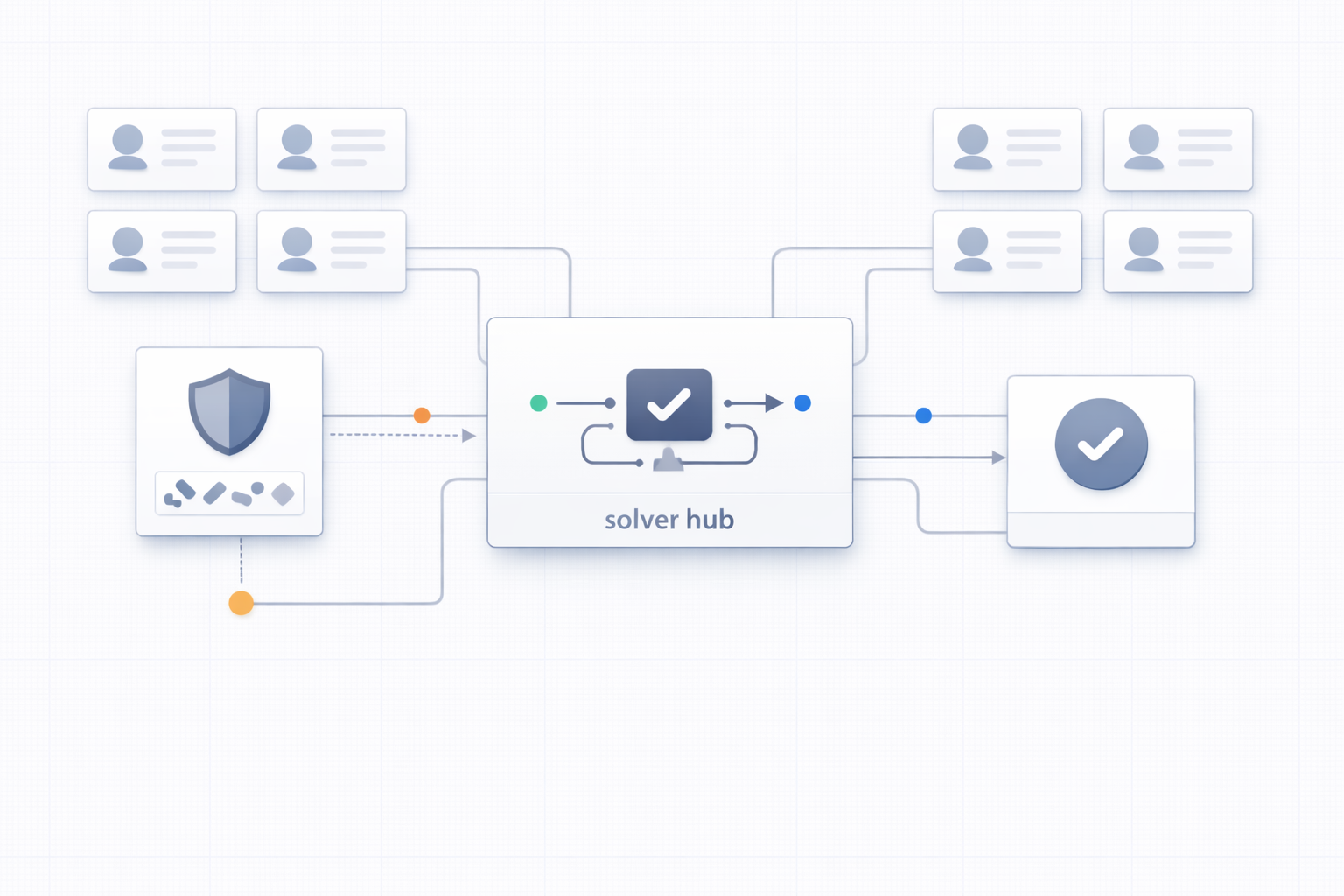
Strip away the buzzwords and a modern matrix is three layers working in sequence:
- The AI layer produces and localizes content—scripts, images, short video, captions, replies.
- The isolation layer gives each account its own clean, believable browser environment—a unique fingerprint plus a dedicated proxy—so platforms can't cluster them.
- The orchestration layer ties them together, launching the right environment, loading the right account, and pushing the right content on schedule.
Most teams over-invest in layer 1 and neglect layers 2 and 3. That's backwards. AI content is now a commodity; the durable advantage is being able to distribute it across many identities safely and repeatably.
2. Where AI Actually Plugs In—and Where It Shouldn't
AI earns its place in specific spots along the workflow:
- Content production & rewriting: one core idea becomes 20 platform-native variants.
- Localization: translation plus cultural adaptation for each target market.
- Scheduling & routing: deciding which variant goes to which account and when.
- First-line engagement: drafting replies and comments for a human to approve.
But there's one place AI should not touch: account identity and behavioral fingerprint. AI can write the post; it cannot make ten accounts look like ten different real people from ten different devices. That job belongs to the isolation layer. Blurring this line is exactly how "efficient" matrices get mass-banned—identical timing, identical device signals, identical everything.
3. The Real Bottleneck Is Environment Management, Not Content
Once AI removes the content ceiling, the new ceiling is operational. Every account in a healthy matrix needs:
- A unique, consistent browser fingerprint—Canvas, WebGL, WebRTC, audio, fonts, user agent, and hardware signals that stay stable for that account and differ from every other.
- A dedicated, matching proxy—a clean residential or mobile IP whose location lines up with the account's stated region and never gets shared across accounts.
- Isolated cookies, cache, and local storage—so no shared state leaks a connection between profiles.
Doing this by hand works for five accounts. It collapses at fifty. This is the exact problem an anti-detect browser is built to solve: it gives every account a separate, self-contained environment that behaves like an independent device. And once those environments exist as managed profiles, they can be created and launched programmatically—which is where scaling finally becomes possible.
4. Automating the Matrix with the VMLogin API
The step that turns a manual operation into a real machine is the local API. VMLogin exposes a local automation interface that lets your own scripts—or your AI pipeline—drive the browser directly:
- Programmatic profile creation: generate hundreds of isolated environments with distinct fingerprints and bind each to its proxy, from code, instead of clicking through a UI.
- Launch and control on demand: start a specific profile via API, get back a debugging endpoint, and hand it to Selenium, Puppeteer, or Playwright to automate the actual browsing session.
- Close cleanly and rotate: end a session, preserve that profile's cookies and state for next time, and move to the next account.
A typical 2026 pipeline looks like this: your AI service generates and localizes a batch of posts → an orchestration script asks the VMLogin API to open profile #47 → Puppeteer logs in and publishes → the session closes and state is saved → the loop advances to profile #48. Content, environment, and execution become one continuous, unattended flow.
5. Risk Boundaries: Automate the Work, Not the Recklessness
Automation multiplies whatever you feed it—including mistakes. A matrix scales safely only inside clear boundaries:
- Warm up before you scale. New accounts need human-like ramp-up—light browsing, gradual activity—before automated publishing. Don't send a day-old account into full-throttle posting.
- Randomize behavior. Identical posting times, identical intervals, and identical action sequences across accounts are a classic detection signal. Add jitter to timing and vary the patterns.
- Keep engagement human-in-the-loop. Let AI draft comments and replies; let a person approve them. Fully automated engagement is the fastest route to a mass flag.
- Respect per-platform limits. Each platform has its own tolerance for velocity and volume. Automate within those limits, per account—not a blanket policy across all of them.
- One account, one environment, one proxy—always. The moment you reuse an IP or a fingerprint to "save resources," you've reconnected the accounts you worked to separate.
The goal is to automate the repetitive labor while keeping the judgment—and the identity discipline—intact.
6. A Practical Blueprint
If you're building or rebuilding a matrix this year, the sequence is:
- Define your account count, target platforms, and regions.
- Provision a dedicated, region-matched proxy for each account.
- Create one isolated anti-detect browser profile per account, each with a unique fingerprint.
- Build (or connect) your AI content and localization pipeline.
- Use the VMLogin API + Selenium/Puppeteer to script profile launch, login, and publishing.
- Layer in warm-up schedules, behavioral randomization, and human approval for engagement.
- Monitor account health and adjust pacing—scale the pipeline, not the risk.
Bringing It Together
In 2026, AI has made content abundant and cheap. The scarce, defensible skill is running many identities safely at scale—and that comes down to clean environment isolation plus disciplined automation. An anti-detect browser like VMLogin provides the foundation: unique, stable fingerprints and fully isolated environments for every account, plus a local API that lets your AI pipeline create, launch, and control hundreds of profiles programmatically. Get that foundation right, and your matrix scales with your ambition instead of collapsing under it.